SouthPark vs Ballantyne — Which Charlotte District Fits You
A direct comparison of Charlotte's two leading affluent districts: housing stock, commute, schools, dining, price behavior, and the household each one genuinely suits.
Two very different versions of affluent Charlotte.
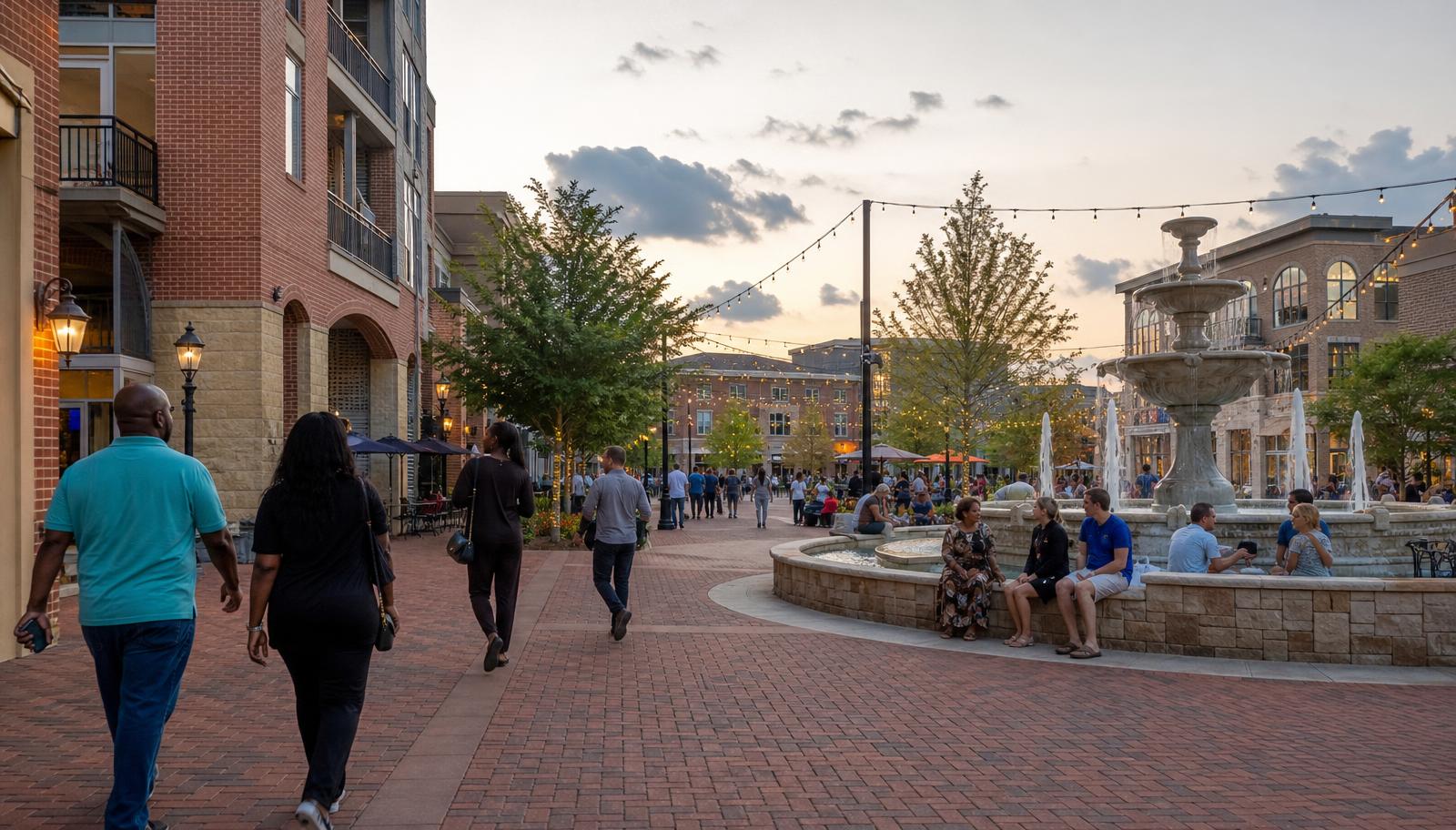
SouthPark and Ballantyne are the two districts most relocating households compare, and the choice usually comes down to a single question: do you want an established district with mature canopy and walkable luxury retail, or a newer master-planned environment with larger, more modern homes at a lower cost per square foot?
SouthPark is built out. Its housing stock dates largely from the 1950s through the 1990s, its trees are seventy years old, and its retail core is the strongest in the Carolinas. Nothing new is added except through tear-down, which is why prices are supply-constrained and why renovation quality varies so much.
Ballantyne was master-planned from the 1990s onward. Homes are newer and larger, streets are wider, amenities are consolidated into planned centers, and inventory is far more plentiful. The trade is character and canopy — the trees are young, and the district reads suburban in a way SouthPark does not. Buyers evaluating the club-adjacent end of that market can review homes around Ballantyne Country Club for a closer look at that specific pocket.
SouthPark and Ballantyne compared.
| Variable | SouthPark | Ballantyne |
|---|---|---|
| Housing era | 1950s–1990s, plus tear-down custom | 1990s–present, master-planned |
| Typical lot | Moderate to estate, mature canopy | Larger, young landscaping |
| Price per square foot | Higher | Lower |
| Uptown commute | 12–20 minutes | 25–40 minutes |
| Retail core | SouthPark Mall, Phillips Place — regional draw | Ballantyne Village and planned centers |
| Dining depth | Deepest in Charlotte | Growing, more chain-weighted |
| Walkability | Genuine in the core enclaves | Limited, car-dependent by design |
| Golf and clubs | Quail Hollow, Carmel, Charlotte Country Club | Ballantyne Country Club, resort golf |
| Inventory availability | Constrained | Plentiful |
| Best for | Established luxury, walkability, short commute | Space, newer construction, value per foot |
How to decide.
Choose SouthPark if your commute runs to Uptown, if walkable dining and retail matter to your daily life, if you value mature canopy and architectural pedigree, and if you are prepared to pay a premium per square foot for a supply-constrained market.
Choose Ballantyne if you want more house for the money, prefer newer construction with modern layouts, work in the south corridor or remotely, and are comfortable with a car-dependent daily pattern.
Many households split the difference by buying in SouthPark's southern edge — Beverly Woods, Montibello, Cameron Wood — where lot scale improves, prices moderate, and the retail core remains a short drive rather than a project.
Visitors comparing the two should stay in one and eat in the other. The difference in evening pace between SouthPark's restaurant corridor and Ballantyne's planned centers is the single clearest signal of which environment fits.
Frequently asked questions.
Neither is objectively better. SouthPark wins on walkability, dining depth, mature canopy, and Uptown commute. Ballantyne wins on square footage per dollar, newer construction, and inventory availability.
Generally yes on a price-per-square-foot basis. Comparable finish levels typically cost less in Ballantyne, largely because supply is far less constrained than in built-out SouthPark.
Roughly ten to fifteen minutes off-peak, longer during weekday afternoon congestion on the south corridor.
Both areas hold well-regarded public assignments and sit near strong private options. SouthPark is closer to Charlotte Latin, Charlotte Country Day, and Providence Day; Ballantyne families more often use the Ardrey Kell and Community House assignment cluster.