The History of SouthPark
From the colonial-era Sharon community to the 1970 opening of SouthPark Mall and today's $1.5B retail engine — the story of how a stretch of Mecklenburg farmland became Charlotte's most refined district.
Colonial Sharon
The land that is now SouthPark was settled in the 1760s by Scots-Irish and German Lutheran families who founded the Sharon community, anchored by Sharon Presbyterian Church (organized 1826, one of the oldest in Mecklenburg County). Cotton, dairy, and small subsistence farms dominated for more than a century.
The Harris, Cameron, Barclay, and Faires families assembled large tracts that would later carry their names into modern subdivisions — Barclay Downs, Cameron Wood, and the original Foxcroft farmstead among them.
Post-War Suburbanization
After World War II, Charlotte's growth pushed south along Providence and Sharon Roads. Foxcroft was platted beginning in 1959 on land previously farmed by the Cameron family; Quail Hollow followed in 1961; Barclay Downs and Sharon Woods filled in through the early sixties.
Lots were generous by design — Foxcroft averaged more than an acre — and restrictive covenants protected mature tree canopy, setting an architectural tone that still defines the area.
The Mall That Changed Everything
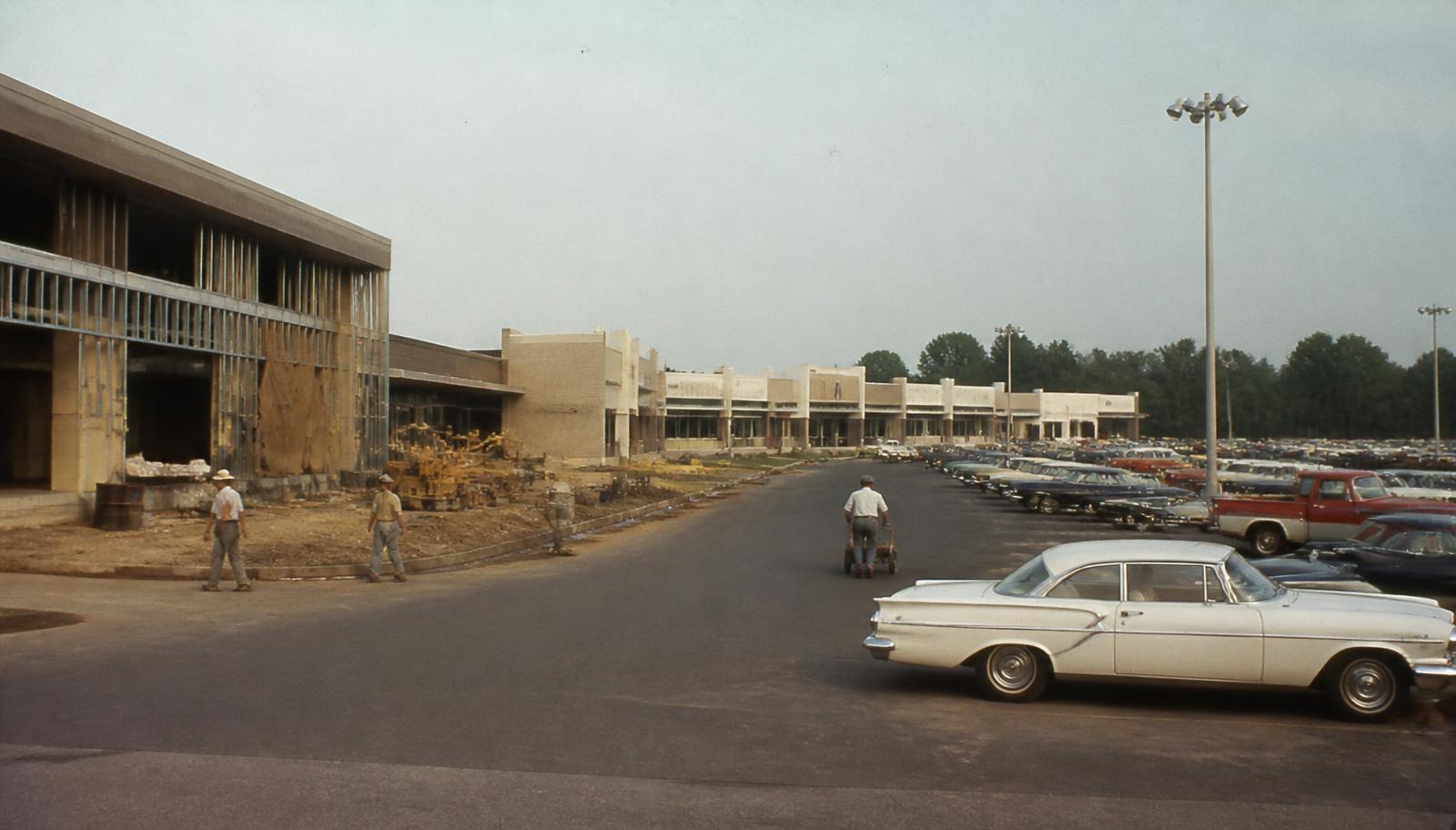
On February 12, 1970, the Belk and Ivey families opened SouthPark Mall on 83 acres of former Sharon farmland. It was the first enclosed mall in the Carolinas and immediately drew shoppers from across both states.
Successive expansions (1983, 2002, and ongoing) added Nordstrom, Neiman Marcus, Hermès, Louis Vuitton, Tiffany & Co., and a roster of luxury houses unmatched between Washington and Atlanta.
Verticalization & The Modern Era
The Sharon, Piedmont Row, The Cielo, Morrison Place, and Apex SouthPark introduced high-rise condominium living to a previously low-rise district. Phillips Place, completed in 1997, pioneered the walkable mixed-use village format that has since defined American luxury submarkets.
Today SouthPark generates more than $1.5 billion in annual retail sales, supports roughly 50,000 daytime workers, and is consistently cited as one of the Southeast's top three luxury retail destinations.
By the Numbers
Discover the Neighborhoods
From Foxcroft estates to high-rise condominiums, every SouthPark community has its own architectural and cultural story.