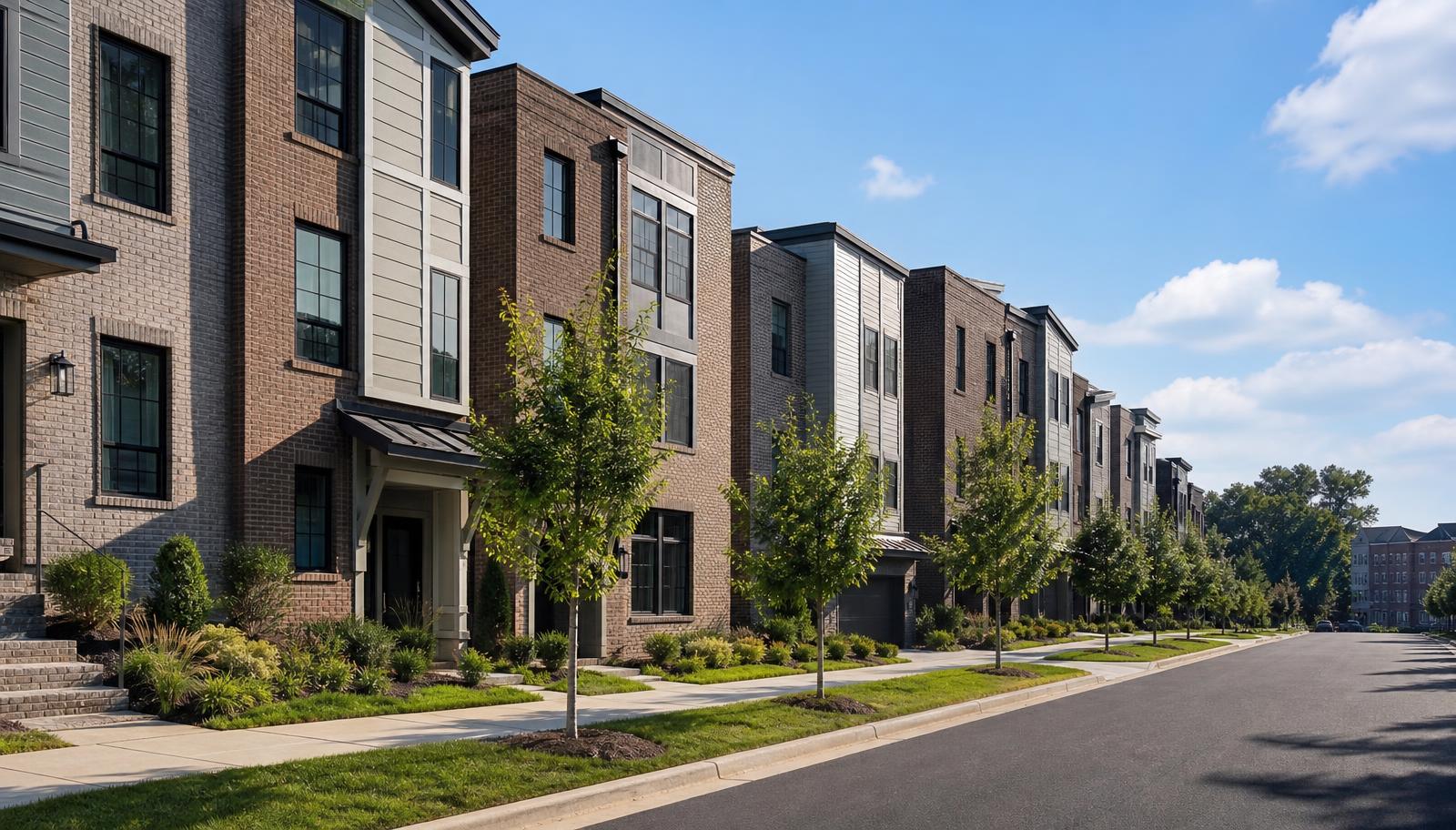
Townhomes
Townhomes in SouthPark Charlotte: where attached homes sit between estate houses and condos, what HOAs cover, and what to check before buying.
Where the townhome makes sense.
SouthPark's townhome inventory serves three buyer profiles: down-sizing residents who want maintained exterior with single-family interior scale, dual-career couples who want walkability without the elevator-and-doorman density of a tower, and pre-family professionals using the townhome as a stepping-stone before a Foxcroft or Barclay Downs single-family move.
Where to look.
| Project | Style |
|---|---|
| Foxcroft East | Traditional brick, attached |
| Phillips Place Townhomes | Above-retail walk-up |
| Sharon Lane | Modern boutique |
| Park Road area townhomes | Mid-2000s traditional |
| Morrison Place townhomes | Urban-village |
What to verify.
Townhome diligence sits between condominium and single-family. HOA documents matter (master insurance, reserve study, special-assessment history), as does the boundary line between unit-owner and association responsibility for the building envelope — many older townhome associations carry weaker reserve discipline than condominium towers.
Confirm lot lines and zoning before closing
Townhome and attached-home parcels can carry shared-wall easements, party-wall agreements, or HOA plats that are not always obvious from a listing photo. Mecklenburg County's Polaris property system lets a buyer pull the recorded parcel boundary, zoning classification, and ownership history for a specific address, which is a useful cross-check alongside the attorney's title search before closing on a new-construction or resale townhome in SouthPark.
Most SouthPark townhome HOAs fall under the Planned Community Act
Townhome communities built in North Carolina on or after January 1, 1999 are generally governed by the North Carolina Planned Community Act, Chapter 47F of the General Statutes, which sets baseline rules for assessments, association records, meetings, and amendment of the governing declaration, per the North Carolina General Assembly. Separately, nearly every residential resale in the state — townhomes included — requires the seller to complete the Residential Property and Owners' Association Disclosure Statement, a form prescribed by the NC Real Estate Commission under G.S. 47E-4 covering the water and sewer system, structural components, zoning and restrictive covenants, and known environmental hazards.
A seller is permitted to answer "no representation" on individual items in that disclosure, which shifts the burden to the buyer to investigate independently — making the documents listed below worth requesting regardless of what the standard disclosure form says.
What to request from the HOA before closing on a townhome
Beyond the seller's disclosure, a buyer or buyer's attorney typically requests directly from the HOA or its management company: the recorded declaration, bylaws, and any amendments; current monthly or quarterly assessment amount and whether any increase is pending; the association's most recent budget and reserve-fund balance; minutes from recent board meetings disclosing pending litigation or large capital projects; and a payoff/resale certificate confirming the seller's account is current. Under the Planned Community Act's records provision, G.S. 47F-3-118, associations must keep financial and meeting records reasonably available for examination by owners and their authorized agents, which gives a buyer's representative a basis to request these documents directly from the association rather than relying solely on the listing agent's summary.
For attached and party-wall properties specifically, it's also worth confirming in the declaration who is responsible for roof, siding, and shared-wall maintenance — responsibility splits between individual owners and the association vary by community and are not standardized across SouthPark's townhome developments.
Consider a townhome.
Inventory introductions and off-market townhome opportunities.