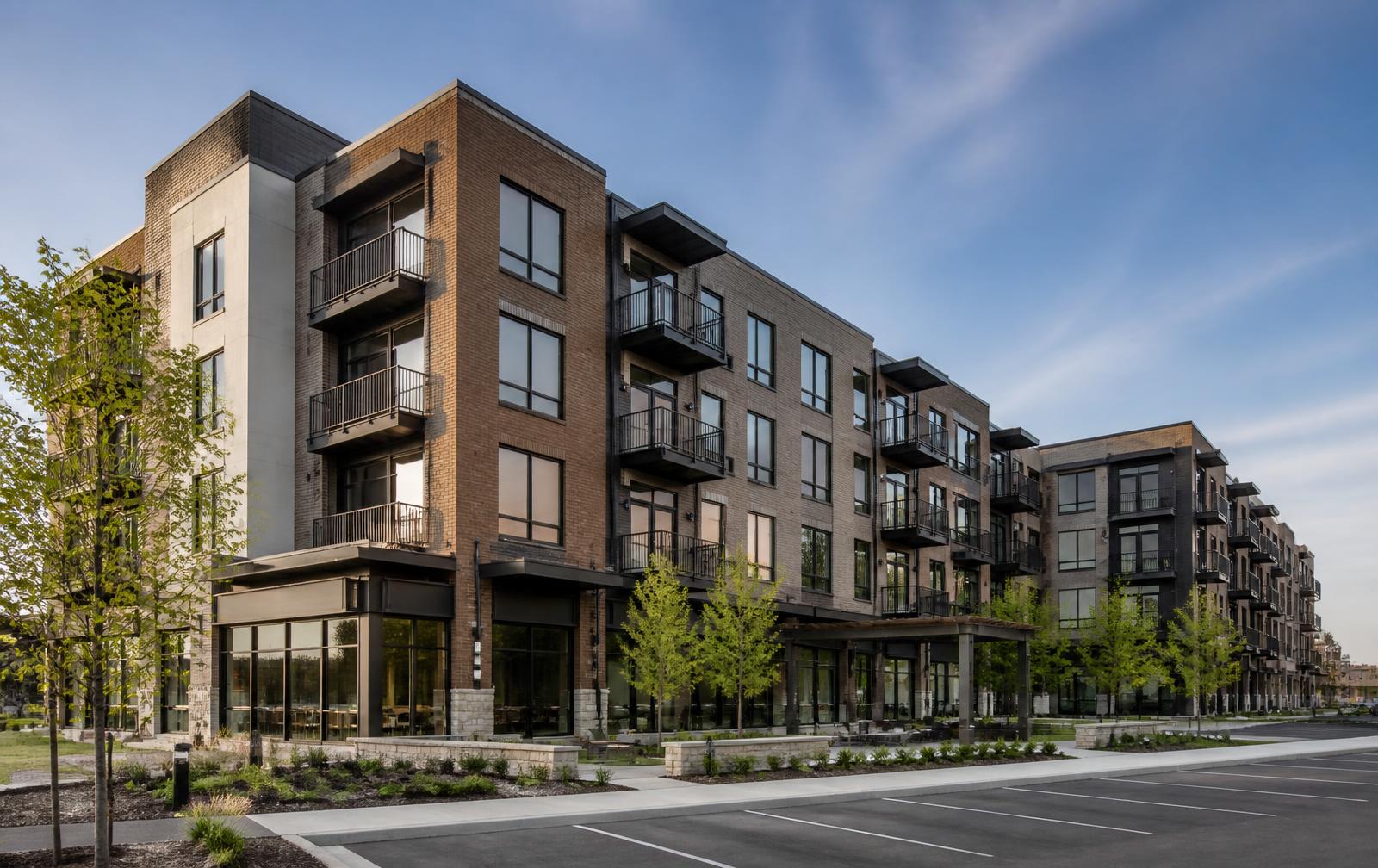
SouthPark Apartments & Rentals
Renting is how a large share of people actually enter SouthPark — as a relocation landing pad, a bridge between houses, or a permanent choice for people who want the district's walkable core without owning in it.
What the SouthPark rental market actually looks like
SouthPark's rental inventory falls into several distinct product types that are often lumped together in search results. Newer luxury mid-rise and mixed-use buildings sit in and around the commercial core, typically with structured parking, amenity decks, and ground-floor retail. Older garden-style communities occupy the corridors slightly farther out, generally offering more square footage per dollar and surface parking. A third category — individually owned condominiums and townhomes leased by their owners — never appears in apartment-community marketing at all, and is frequently the best-value option for someone who wants a specific building or school boundary.
Because the district is not a single development, rental experience varies as sharply as ownership does. A unit two blocks from the mall and a unit two miles out share a search term and almost nothing else.
This page is an editorial orientation, not a listing feed. We do not publish live rents, availability, or unit-level pricing, because those change weekly and stale rental data is worse than none.
Comparing rental formats in the district
Use this to narrow your search category before you start touring. Every row varies by specific community — verify details with the property.
| Format | Typical location | Usually includes | Best suited to |
|---|---|---|---|
| Luxury mid-rise / mixed-use | Commercial core and adjacent blocks | Structured parking, amenity deck, controlled access, ground-floor retail | Walkable-lifestyle renters, relocating executives, short-term landings |
| Garden-style community | Corridors outside the core | Surface parking, larger floor plans, more green space | Renters prioritizing square footage and value |
| Owner-leased condo | Condominium buildings throughout the district | Building amenities set by the HOA, assigned parking | Renters targeting a specific building or address |
| Owner-leased townhome | Townhome communities and infill pockets | Attached garage, multiple levels, small yard | Families and pet owners who want house-like space |
Walkable core vs. everywhere else
The single biggest decision in a SouthPark rental search is how close you want to be to the commercial core. Inside it, you trade square footage and quiet for the ability to walk to groceries, coffee, restaurants, and the mall. Outside it, you gain space and calm and give back most of that walkability.
Sidewalk continuity is the detail renters most often overlook. Walk the actual route between a prospective building and the destinations you care about — not the straight-line distance on a map — before you assume a unit is walkable. Several buildings that look adjacent to retail on a map are separated by a stroad crossing that changes the experience entirely.
Also consider event and holiday traffic. Proximity to a major regional retail destination is an amenity most of the year and a congestion problem on peak shopping weekends.
What to verify before you sign
Parking: whether it is assigned, structured, surface, or paid separately, and how guest parking works. In core buildings this is often a monthly line item rather than an inclusion.
Pet policy and fees, which differ sharply between institutional apartment communities and individual condo owners bound by HOA rules.
For owner-leased condos and townhomes, ask which rules come from the lease and which come from the homeowners association — including move-in scheduling, short-term rental restrictions, and amenity access. Never assume; ask for the governing documents.
School assignment, if relevant. Renters are subject to the same Charlotte-Mecklenburg Schools attendance boundaries as owners, and assignment depends on the exact address, not on the SouthPark name.
Renewal terms and how the community handles mid-lease rate changes on month-to-month extensions — a common friction point for relocating renters on uncertain timelines.
Renting first as a relocation strategy
For people relocating to Charlotte, renting in SouthPark for a lease term before buying is a defensible strategy specifically because the district is so internally varied. A year in the core teaches you whether you actually want walkability or merely like the idea of it, and it lets you drive your commute in real conditions before committing to a street.
The counterargument is straightforward: in a rising market, a year of renting can cost the appreciation you would have captured. That tradeoff is personal and depends on your certainty about location, timeline, and housing type.
If you already know you want to own, the more useful next step is the neighborhood directory rather than a rental search.
SouthPark apartment questions
Yes. The district includes newer luxury mid-rise and mixed-use rental buildings in and near the commercial core, typically offering structured parking, controlled access, and amenity decks, alongside older garden-style communities and individually owned condominiums leased by their owners.
It is possible from the walkable commercial core for day-to-day needs, but it is not practical from most of the district. Charlotte's light rail does not serve SouthPark directly, so residents outside the core rely on driving.
It varies by community. Core mid-rise buildings commonly use structured parking that may be charged monthly, while garden-style communities typically offer surface parking. Confirm assignment, cost, and guest parking with the specific property before signing.
Apartment communities offer standardized management, on-site staff, and easier applications. Owner-leased condos and townhomes can offer a specific building, address, or school boundary that no apartment community can match, but they come with HOA rules layered on top of the lease. Neither is universally better.
Know the district before you sign a year to it.
Our living guide covers walkability, commuting, schools, and the four very different versions of daily life inside SouthPark.