Living in SouthPark, Charlotte
SouthPark is a district, not a subdivision — and the experience of living here changes materially depending on whether your front door opens onto a mid-century residential street, a condominium lobby, or a mixed-use courtyard within walking distance of the mall.
SouthPark is a district, not one neighborhood
SouthPark sits roughly six miles south of Uptown Charlotte in Mecklenburg County, North Carolina, organized loosely around the intersection of Sharon Road, Fairview Road, and Barclay Downs Drive. Its commercial core includes SouthPark Mall, several mid-rise office buildings, hotels, and mixed-use retail; radiating outward from that core are established residential neighborhoods that predate most of the commercial development.
Because of this structure, statements like "SouthPark homes average X" or "SouthPark is served by Y school" are almost always too coarse to be useful. There is no single HOA, no single architectural covenant, and no single attendance boundary covering the whole district. Every practical question about living here — schools, walkability, noise, home value, renovation rules — resolves at the street or address level.
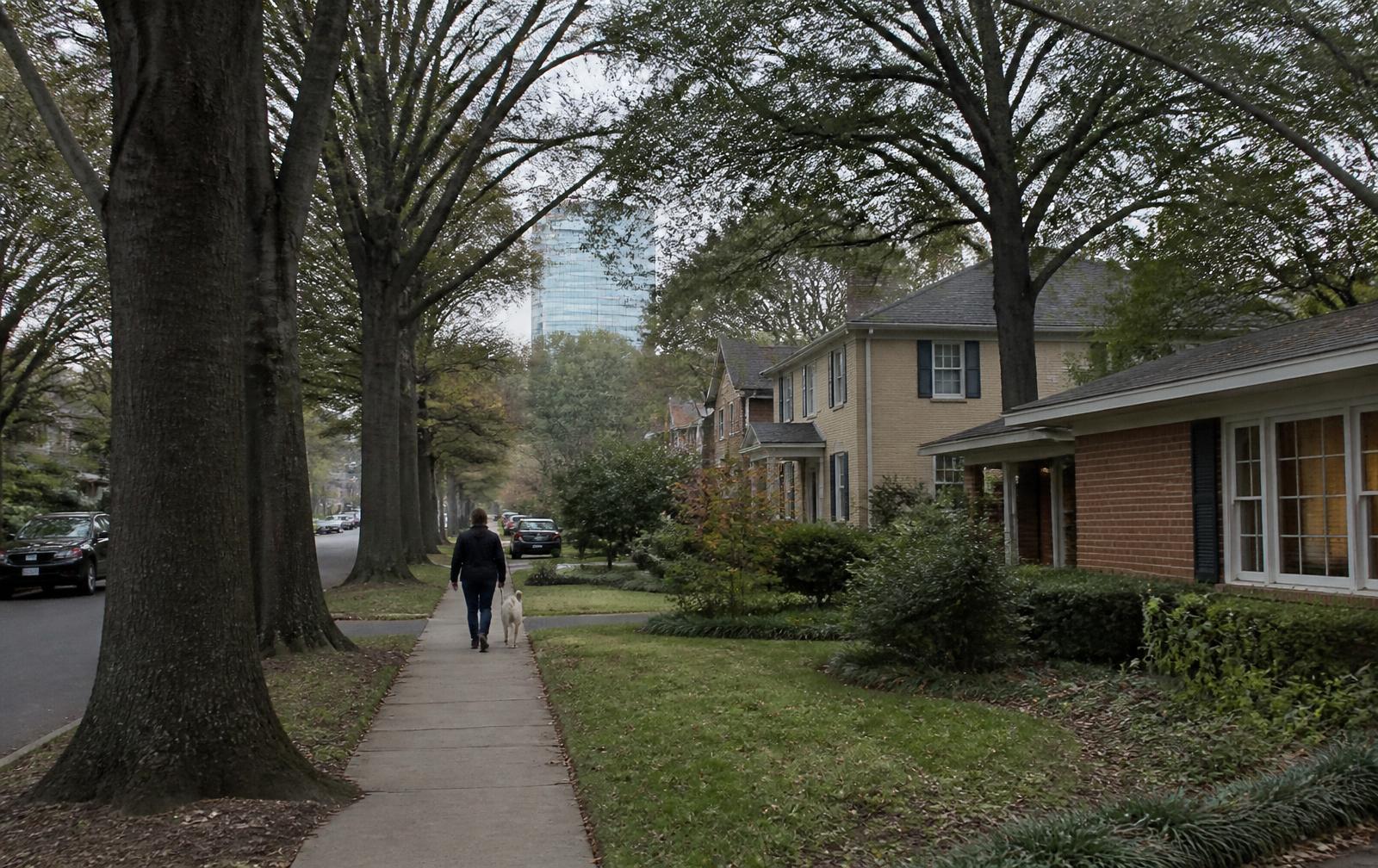
The most useful way to think about SouthPark is as four overlapping living conditions: the walkable commercial core, the condominium and townhome belt immediately surrounding it, the established single-family neighborhoods within a mile or two, and the estate-scale neighborhoods on the district's western and southern edges.
Four different versions of living in SouthPark
The same ZIP code produces very different daily routines. This table describes the practical differences rather than ranking them.
| Where you live | Typical housing | Daily rhythm | Main tradeoff |
|---|---|---|---|
| Commercial core | Condominiums, apartments, mixed-use residences | Walk to shopping, coffee, dinner; car mostly for errands outside the district | Traffic and event congestion at peak retail hours |
| Condo & townhome belt | Low-rise condos, attached townhomes, small-lot detached | Short drives everywhere; some walkable blocks, some not | Walkability varies block to block; sidewalk coverage is uneven |
| Established single-family | 1950s–1970s brick ranches and two-story traditionals, many renovated | Suburban routine with a five-minute drive to the core | Older housing stock often needs systems and envelope work |
| Estate-scale edges | Larger lots, custom and heavily renovated homes | Privacy and canopy; nearly everything by car | Least walkable; highest carrying costs |
Walkability, driving, and commuting
Walkability in SouthPark is real but bounded. The commercial core and the mixed-use pockets around it were built with sidewalks, crosswalks, and short blocks; a resident of a core condominium can genuinely run a week of errands on foot. A half-mile out, the pattern reverts to postwar suburban planning — wider roads, longer blocks, and stretches without continuous sidewalk. Do not assume the walk score of the district applies to a specific address.
Charlotte's LYNX light rail does not serve SouthPark directly; the district is served by bus routes and by car. Most residents commuting to Uptown drive, typically via Providence Road, Park Road, or the Sharon Road / Woodlawn corridor toward I-77 or I-277. Travel times vary widely by hour and by route, so verify your own commute with live routing at the times you would actually drive rather than relying on a published average.
Charlotte Douglas International Airport is west of the city, reached most directly via Billy Graham Parkway or I-77. For anyone flying weekly, airport access is one of the strongest practical arguments for the district's location relative to neighborhoods farther south.
Shopping, dining, groceries, and services
SouthPark Mall anchors the district's retail identity, but daily life leans just as heavily on the surrounding shopping centers and mixed-use developments: grocery stores, pharmacies, dry cleaners, salons, and the specialty retail clustered along Fairview and Sharon Roads. Residents of the core frequently describe the mall itself as a weekend destination and the surrounding centers as the weekday infrastructure.
The restaurant environment spans chef-driven fine dining, steakhouses, hotel restaurants, patio-and-brunch rooms, and a deep bench of coffee shops. Reservations at the top tier move quickly on weekends. Tenant rosters change — both in the mall and along the corridors — so treat any list, including ours, as a snapshot with a date on it.
Healthcare access is a genuine strength: both major regional hospital systems operate campuses and specialty clinics within a short drive, and several concierge and membership practices maintain SouthPark-area offices.
Schools depend on your exact address
Public school assignment in this area is handled by Charlotte-Mecklenburg Schools and is determined by the attendance boundary for a specific property, not by the SouthPark label. Because the district spans several boundaries, two homes a few streets apart can be assigned to different schools. Boundaries are also subject to periodic review and change.
The area also has meaningful private school presence, with several independent and parochial schools within a short drive. Admission is by application and is unrelated to address.
Before making an offer on any home, verify the current assignment for that exact address directly with Charlotte-Mecklenburg Schools. Do not rely on a listing sheet, a neighborhood page, or this guide as the authoritative source.
Housing costs and the value question
SouthPark housing is diverse enough that a single average price is misleading. A one-bedroom condominium, a 1,900-square-foot brick ranch awaiting renovation, a new-construction townhome, and a renovated estate home are four separate markets that happen to share a district name. Segment before you compare.
Two dynamics recur in the district's for-sale market. First, land value in the established neighborhoods has risen enough that older houses are frequently purchased for their lot and their location, then substantially renovated or replaced. Second, a meaningful share of estate-tier activity happens quietly, off-market or pre-market, which distorts what public listing feeds appear to show.
For how to read segmented pricing responsibly, see our companion piece on SouthPark home values — including which comparisons are legitimate and which are not.
Living in SouthPark: frequently asked questions
SouthPark is best described as a district within Charlotte, North Carolina. It contains multiple distinct residential neighborhoods, a large retail core anchored by SouthPark Mall, office buildings, hotels, condominiums, and townhome communities. It is not a single subdivision with one HOA or one housing style.
No. SouthPark Mall is the district's best-known landmark and the origin of the name, but the SouthPark district extends well beyond the mall property to include residential neighborhoods, office corridors, hotels, parks, and other retail centers.
Partly. The commercial core and the mixed-use blocks around it are genuinely walkable, with sidewalks and short blocks. Established residential neighborhoods farther out are suburban in pattern with uneven sidewalk coverage, so walkability should be evaluated address by address rather than for the district as a whole.
SouthPark sits roughly six miles south of Uptown Charlotte. Actual drive time varies substantially by route and time of day, so check live routing for the hours you would actually travel.
Detached single-family homes ranging from mid-century brick ranches to estate-scale custom houses, plus condominiums, attached townhomes, and rental apartment communities. The district's housing stock is deliberately mixed rather than uniform.
Public school assignment is determined by Charlotte-Mecklenburg Schools attendance boundaries for the specific property address. Because the district spans several boundaries, there is no single set of schools that serves all of SouthPark. Verify assignment for an exact address with CMS.
Choose your street before you choose your house.
The neighborhood directory breaks the district down by community, with each one classified as within, adjacent to, or near SouthPark.